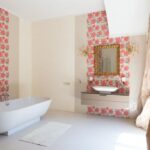
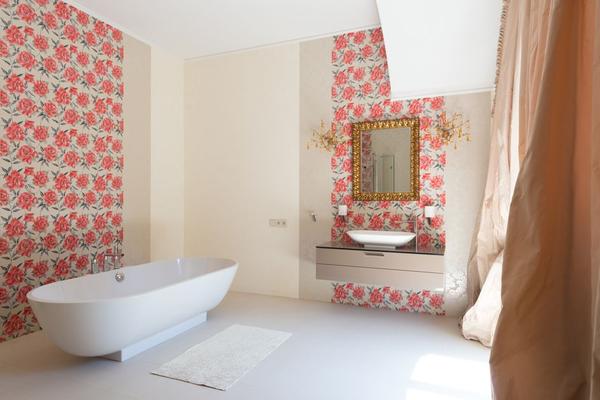
Bathroom wallpaper can work beautifully, but the material matters more here than it does in a bedroom or hallway. Steam, condensation, splashes, cleaning, and repeated temperature changes all put extra stress on the surface and adhesive. The best wallpaper for bathrooms is therefore not simply the prettiest pattern. It is a wallcovering whose face, backing, and installation method suit the amount of moisture that particular wall receives.
The key is to separate humidity from direct water. A steamy room can be manageable with the right wallpaper and ventilation, while a shower enclosure or constantly splashed bath surround is a different environment. Wallpaper should generally stay out of those wettest zones, where tile, glass, or purpose-made waterproof panels are more dependable.
Which Bathroom Wallpaper Materials Handle Moisture Best?
Solid vinyl
Solid vinyl is one of the most practical bathroom wallpaper materials because the decorative face is a continuous vinyl layer. It is durable, moisture resistant, and usually easier to wipe or scrub than uncoated paper. For a busy bathroom used for daily showers, vinyl bathroom wallpaper is a strong choice for dry or lightly splashed walls, such as behind a toilet or on a feature wall opposite the shower.
It still should not be treated like a shower liner: moisture resistant does not mean designed for constant direct water.
Vinyl-coated paper
Vinyl-coated paper has a paper substrate with a protective vinyl or acrylic-type coating over the decorative face. That coating improves resistance to moisture and cleaning compared with plain paper. Industry guidance identifies vinyl-coated paper as suitable for bathrooms and kitchens, although it is less robust than solid vinyl under prolonged moisture exposure.
This makes it a useful middle ground for a well-ventilated bathroom. It can work well on upper walls or a vanity wall that is not routinely splashed.
Washable coated wallpaper
Washable wallpaper can be useful in a bathroom, but the label needs careful reading. “Washable” describes how well a surface tolerates occasional cleaning; it does not automatically mean the product is suitable for sustained humidity. A “scrubbable” rating generally indicates a tougher surface.
Look for a manufacturer statement that specifically allows bathroom use or high-humidity rooms. If the description talks only about wiping marks away, do not assume it is moisture resistant enough for a showering bathroom.
Non-woven wallpaper
Non-woven wallpaper is popular because many versions are dimensionally stable and designed for paste-the-wall installation. However, “non-woven” describes the substrate, not necessarily the moisture performance of the decorative surface.
A non-woven wallpaper with a suitable protective coating may perform well in a bathroom; an uncoated version may not. Judge the complete product specification rather than the backing alone. Once the material is sorted, a bathroom wallpaper ideas guide can help with pattern and placement choices.
Traditional paper wallpaper
Uncoated paper wallpaper offers a huge range of designs, but it is less forgiving of moisture, splashes, and repeated wiping. In a powder room with no bath or shower, it can be reasonable if it is kept clear of the basin splash area.
In a family bathroom that becomes steamy every morning, plain paper is a higher-maintenance choice because seams and edges are more vulnerable to persistent condensation.
Be Cautious With Peel-and-Stick Wallpaper
Peel-and-stick wallpaper is convenient for renters and quick makeovers, but high humidity can be hard on pressure-sensitive adhesive. York Wallcoverings warns that bathrooms and kitchens are more prone to bubbling and seam separation with peel-and-stick products. Use only a removable product whose manufacturer approves the intended bathroom conditions.
The Wall Location Matters as Much as the Material
A practical test is to look at what happens after a hot shower. If droplets regularly form and run down a wall, or water from a shower, bath, or basin lands on it, treat that wall as a wet zone rather than simply a humid one. Wallpaper is better placed on the opposite wall, behind the toilet, above panelling, or somewhere that gets steam but not routine soaking.
For example, imagine a family bathroom with a shower over the bath. A solid vinyl feature wall opposite the bath may perform well when the extractor fan is used consistently. The wall directly above the bath taps is likely to receive repeated splashes, so tiling or panelling there and reserving wallpaper for the drier side is the more durable combination.
Preparation and Ventilation Decide How Long It Lasts
Even the best moisture resistant wallpaper can fail on a damp, dirty, glossy, or unstable wall. The surface should be clean, dry, sound, and smooth before installation. Existing mildew or a moisture problem should be dealt with at its source rather than covered. Follow the wallpaper manufacturer’s primer and adhesive instructions because the correct system varies by backing and wall condition.
Ventilation matters just as much. Run the extractor fan during and after showers, or use a window where appropriate, so humid air does not remain trapped. Good airflow helps protect seams, adhesive, paint, and other bathroom finishes.
After the practical choices are made, you can focus on how to choose wallpaper colors and small bathroom design ideas. Material first, pattern second is the order that prevents an attractive scheme from becoming a maintenance problem.
How to Compare Bathroom Wallpaper Before You Buy
Start with the room type and intended wall. A powder room has different demands from a bathroom used for several showers each day. Then check the manufacturer’s technical description rather than relying on marketing words alone. Look for bathroom suitability, moisture resistance, cleaning classification, compatible adhesive, and restrictions on high-humidity installation.
For a frequently used bathroom, solid vinyl is usually the strongest choice, with vinyl-coated paper close behind for drier walls. Approved coated washable papers and suitable non-wovens can also work well. Plain paper and generic peel-and-stick products deserve more caution.
FAQ
What type of wallpaper is best for a bathroom?
For a full bathroom with regular steam, solid vinyl is one of the most durable choices because it resists moisture and is easy to clean. Vinyl-coated paper is also a strong option for walls away from direct water.
Is bathroom wallpaper waterproof?
Most bathroom-suitable wallpaper should be treated as moisture resistant rather than waterproof. Even vinyl wallpaper is best kept away from shower interiors, bath surrounds, and other areas that receive repeated direct water.
Can washable wallpaper be used in a bathroom?
Yes, if the manufacturer also rates it for bathrooms or humid conditions. A washable label mainly describes cleanability, so it should not be used as the only proof of moisture performance.
Can I use peel-and-stick wallpaper in a bathroom?
It can work in a low-moisture powder room or on a dry bathroom wall if the manufacturer permits it. In high humidity, removable wallpaper is more vulnerable to bubbling and seam separation.
Choose for the Moisture Level, Not Just the Look
The most successful bathroom wallpaper schemes match the wallcovering to the conditions of the room. Solid vinyl offers strong practical resilience for busy bathrooms, while vinyl-coated and other approved washable options give you more flexibility on drier walls. Keep wallpaper out of direct wet zones, prepare the surface properly, and control humidity with ventilation. Do those things first, and you can choose color and pattern with confidence.