Bathrooms ask more from a wall covering than almost any other room. Steam gathers after every shower, condensation settles on cool surfaces, and splashes are part of daily life. That does not mean you have to settle for plain painted walls. The right vinyl wallpaper for bathrooms can add colour, pattern, and texture while coping far better with humidity than traditional paper wallpaper.
The key is choosing a product made for damp conditions rather than assuming every design labelled “vinyl” is equally suitable. Construction, finish, adhesive, wall preparation, and ventilation all affect performance. The best options are moisture resistant and washable, but most should still be kept away from constant direct water, such as inside a shower enclosure.
Why Vinyl Works Well in Bathrooms
Vinyl wallpaper has a protective synthetic surface that absorbs less moisture than ordinary paper. This makes it a practical bathroom wallpaper choice because steam and occasional splashes are less likely to penetrate the decorative face. Many products can also be wiped clean, which is useful around vanities and in busy family bathrooms.
However, “moisture resistant” and “waterproof” are not always interchangeable. Standard vinyl wallpaper may handle humidity and indirect splashes, but it is not automatically a substitute for tile, waterproof panels, or a properly sealed shower system.
Best Types of Vinyl Wallpaper for Bathrooms
Solid Vinyl for Reliable Moisture Resistance
Solid vinyl is usually the best all-round choice for a frequently used bathroom. Its decorative face is made from vinyl rather than a light coating over paper, giving it better resistance to moisture, stains, and regular cleaning. It works well on a feature wall, behind a protected vanity, or throughout a well-ventilated cloakroom.
Look for terms such as washable, scrubbable, moisture resistant, or suitable for bathrooms. Check the care symbols and installation instructions rather than relying only on the pattern description. Smooth or lightly textured surfaces are generally easier to wipe than deeply embossed finishes.
Fabric-Backed Vinyl for Hardworking Spaces
Fabric-backed vinyl is heavier and more durable, making it suitable for large family bathrooms or high-traffic spaces where walls are touched and cleaned often. It usually costs more and may require stronger adhesive or professional installation, but its robust finish makes sense where durability is a priority.
Vinyl-Coated Wallpaper for Lower Humidity
Vinyl-coated wallpaper has a paper or similar base with a protective vinyl layer. It can be a good-value option for a guest cloakroom or bathroom with strong airflow and limited shower steam. It is often washable, but generally less moisture resistant than solid vinyl.
Use it where direct splashing is unlikely, and confirm that the manufacturer recommends it for bathrooms. A “wipeable” label alone does not prove that the product is designed for repeated exposure to humidity.
Peel-and-Stick Vinyl for Quick Makeovers
Peel-and-stick vinyl appeals to renters and DIY decorators because it needs no separate paste and can often be removed more easily. It performs best on smooth, clean, well-primed walls in bathrooms with good ventilation. Adhesion varies, so order a sample and test it in the room first.
Self-adhesive wallpaper may lift at seams if applied over texture, dust, uncured paint, or a persistently damp wall. Choose a design approved for bathroom use and keep it outside direct splash areas unless the manufacturer states otherwise.
Choosing the Right Finish and Pattern
A satin, smooth, or lightly embossed vinyl finish is practical because it can be cleaned without trapping residue in deep texture. Glossy surfaces reflect light and may brighten a compact room, although they can highlight uneven walls. Matte-look vinyl feels softer and more contemporary, but its washability still needs checking.
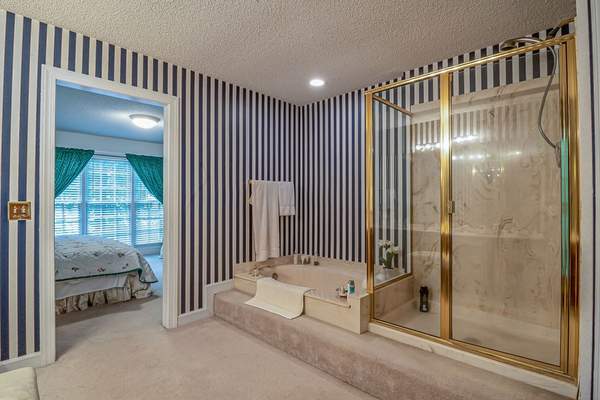
Large botanicals and bold geometrics can turn a small cloakroom into a statement space, while fine patterns, soft stripes, and light stone effects create a calmer look. Calculate roll quantities using the pattern repeat, since a large repeat creates more offcuts. Buying rolls from the same batch also helps avoid visible colour variation.
Where Bathroom Wallpaper Should Go
Good locations include walls away from the bath or shower, the upper section above panelling or tile, a vanity wall with a suitable splashback, and a feature wall opposite the main water source. These positions let you enjoy the design without expecting wallpaper to behave like a permanently waterproof surface.
Avoid ordinary vinyl wallpaper inside shower enclosures, directly behind an unprotected tap, over active damp, or on walls where condensation continually runs down the surface. For a true wet zone, choose a system specifically approved for that use.
Preparation and Ventilation Matter
Even the best moisture resistant wallpaper can fail on a damp or poorly prepared wall. Repair leaks, deal safely with mold or mildew, and solve the underlying moisture problem before decorating. The wall should be clean, dry, smooth, stable, and primed with a compatible product.
Use the adhesive recommended by the manufacturer and pay close attention to seams, corners, and edges around fittings. Ventilation is equally important. Run an extractor fan during bathing and afterwards, open a window when practical, and avoid leaving wet towels to keep the room humid for hours.
A Practical Buying Checklist
Before ordering, confirm that the product is recommended for bathrooms, identify whether it is solid vinyl, vinyl-coated, fabric-backed, or peel-and-stick, and check its washability rating. Review surface requirements, compatible primer and adhesive, roll size, pattern repeat, batch number, return policy, and sample availability.
The best purchase is not always the thickest or most expensive option. It is the wallpaper whose moisture rating, cleaning level, installation method, and design match the exact room. A well-chosen solid vinyl can outperform a premium decorative paper that was never intended for humid conditions.
Frequently Asked Questions
Is vinyl wallpaper fully waterproof?
Not always. Many vinyl wallpapers resist humidity, steam, and occasional splashes, but they are not designed for continuous direct water. Check the manufacturer’s rating and use an approved waterproof surface in true wet zones.
Can vinyl wallpaper be used behind a bathroom sink?
It can work near a sink when protected from repeated splashing, often with a backsplash or enough distance from the tap. For an exposed splash zone, choose a product specifically approved for that location.
Does bathroom wallpaper encourage mold?
Wallpaper does not create mold, but leaks, condensation, trapped moisture, or poor ventilation can allow it to grow on or behind surfaces. Fix moisture problems and ensure the wall is dry before installation.
Is peel-and-stick wallpaper suitable for a steamy bathroom?
Some peel-and-stick vinyl products are suitable for steam and indirect moisture, while others are not. Use a bathroom-rated product, prepare the wall correctly, test a sample, and maintain good ventilation.
Conclusion
Vinyl wallpaper for bathrooms is a smart way to add pattern without choosing a fragile finish. Solid vinyl is the strongest everyday option, fabric-backed vinyl suits demanding spaces, vinyl-coated paper works best in lower humidity, and peel-and-stick designs offer flexibility when the surface is suitable.
Choose a clearly rated, washable product, keep it away from constant direct water, prepare the wall properly, and control humidity. With those basics in place, bathroom wallpaper can remain stylish, practical, and easier to maintain.