“Waterproof” sounds reassuring on a wallpaper label, but a bathroom is not one single moisture environment. A wall beside the toilet may only see humid air, while the surface next to a shower can be hit by steam, condensation and repeated splashes every day. That difference matters more than the marketing word on the roll.
For most homes, waterproof wallpaper for bathroom walls should be treated as a moisture-resistant decorative finish, not as a substitute for tile, waterproof wall panels or another finish designed for continuous wetting. The best results come from matching the wallcovering to the amount of water the wall actually receives.
What “waterproof” usually means for bathroom wallpaper
Many products sold as waterproof bathroom wallpaper have a vinyl or other wipeable surface that resists small amounts of water. That can make them practical for humid rooms and occasional splashes. It does not automatically mean the seams, backing, adhesive or wall behind the paper can tolerate repeated saturation.
This is why “water resistant” is often the more useful way to think about bathroom wallpaper. A wipeable surface may handle condensation that is removed promptly, but water can still find its way through cut edges, seams, damaged areas and openings around fittings. Once moisture reaches the backing or adhesive, bubbling, lifting and staining can follow.
Choose wallpaper by exposure zone, not by label
Low-moisture walls
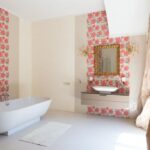
Walls well away from the bath, shower and basin are the easiest places to wallpaper. A feature wall behind a vanity on the opposite side of the room, a wall around the toilet, or the upper part of a wall above tiled wainscoting can work well when the room is properly ventilated. Vinyl-faced and extra-washable wallcoverings are especially useful because they are easier to wipe clean.
Splash-prone walls
A wall near a basin can be suitable if it receives only occasional droplets and has a backsplash behind the tap. Check the manufacturer’s bathroom and washability guidance rather than assuming every peel-and-stick product performs the same way. Heat, humidity and a poorly prepared painted surface can weaken adhesion at corners and seams.
Direct-wet areas
Inside a shower enclosure, immediately beside an open shower, or on a bath surround that is regularly soaked, ordinary wallpaper is a poor default choice. Even when the printed face is described as waterproof, the full installed system may not be designed for constant direct water. In these zones, use a wall finish specifically rated for the application and follow the manufacturer’s installation requirements.
The same caution applies to so-called wet area wallpaper. If a product is genuinely intended for direct-wet installation, its technical information should clearly state the suitable substrate, adhesive, seam treatment and exposure limits. A broad “waterproof” claim on a retail listing is not enough evidence by itself.
The material matters, but installation matters just as much
Vinyl wallcoverings are commonly chosen for bathrooms because the surface is washable and less absorbent than traditional paper. Some non-vinyl products are also approved for moderately humid rooms, so the product specification matters more than the material name.
Before hanging any water resistant wallpaper, the wall should be smooth, sound, clean and completely dry. Fix peeling paint, active damp, leaks or mold before decorating. Wallpaper can hide a problem for a while, but it cannot solve moisture coming through the wall. A suitable primer or sealer can also create a more consistent surface for adhesion, provided it is compatible with the wallpaper system.
Pay particular attention to seams and cut edges. Do not leave loose corners where condensation can creep underneath. Around switches, trim or fixtures, make accurate cuts. Some installers use a compatible clear coating or edge sealer in demanding locations, but only do this when the manufacturer allows it because coatings can alter sheen, color or removability.
Ventilation is part of the wallcovering system
Even durable bathroom wall coverings struggle when a room stays steamy for long periods. An exhaust fan that actually removes moist air outdoors, or effective window ventilation where appropriate, helps reduce condensation on the walls. Run mechanical ventilation while bathing and long enough afterward for surfaces to dry instead of switching it off as soon as the shower stops.
Watch the room rather than relying on a fixed number of minutes. If the mirror and walls remain wet long after use, address the moisture problem before adding wallpaper. Persistent condensation raises the risk of peeling and mold behind finishes.
A practical bathroom example
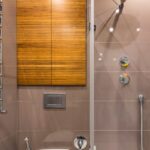
Imagine a family bathroom with a shower-over-bath on one side and a vanity and toilet on the opposite wall. A sensible design would keep tile or a purpose-made wet-area panel around the shower and use washable vinyl wallpaper on the vanity/toilet wall. Add a backsplash behind the basin, prepare and prime the wall carefully, and use the extractor during showers. If droplets land on the wallpaper, wipe them rather than allowing water to sit at a seam.
That arrangement gives you the pattern and color of wallpaper without asking it to perform like a shower membrane. It is a better test of real-world suitability than choosing a product solely because the packaging says waterproof.
Signs wallpaper is in the wrong place
Early warning signs include lifted seams, curling corners, bubbles that appear after showers, discoloration at the bottom edge, a musty smell, or recurring dark spotting. Do not simply glue a lifting edge back down if the wall is damp. Find the moisture source first. A leaking pipe, failed sealant joint or inadequate ventilation needs correcting before the finish is repaired.
For related reading, useful internal topics include bathroom ventilation and humidity control, choosing moisture-resistant wall finishes, and how to prepare walls for wallpaper.
FAQ
Can waterproof wallpaper go inside a shower?
Ordinary bathroom wallpaper should not be assumed suitable for a shower, even if its face is described as waterproof. Use it there only when the manufacturer explicitly rates the complete product and installation system for continuous direct-water exposure.
Is peel-and-stick wallpaper good for bathrooms?
It can work on smooth, dry walls in well-ventilated bathrooms when the product is approved for humid rooms. Keep it away from constant splashing, and test adhesion if the wall has textured, chalky or recently painted surfaces.
What type of wallpaper is best for a humid bathroom?
A washable or scrubbable wallcovering with a moisture-resistant surface, often vinyl-faced, is usually the most forgiving choice. Product-specific bathroom suitability and installation instructions are more important than the material label alone.
Should bathroom wallpaper be sealed?
Not automatically. Sealing can help in some systems, but an incompatible coating may change the finish or cause problems later. Follow the wallpaper manufacturer’s advice before applying varnish, seam sealer or another protective coating.
Choose realistic moisture resistance
Waterproof wallpaper for bathroom walls can be a practical design choice when it is used in the right part of the room. The safest approach is to reserve wallpaper for low-moisture and light-splash zones, choose a durable washable product, prepare the wall properly and keep humidity under control. Where water hits the wall repeatedly, use a finish designed for continuous wetting instead. That distinction is what turns a good-looking bathroom wallpaper project into one that continues to look good after months of showers.