
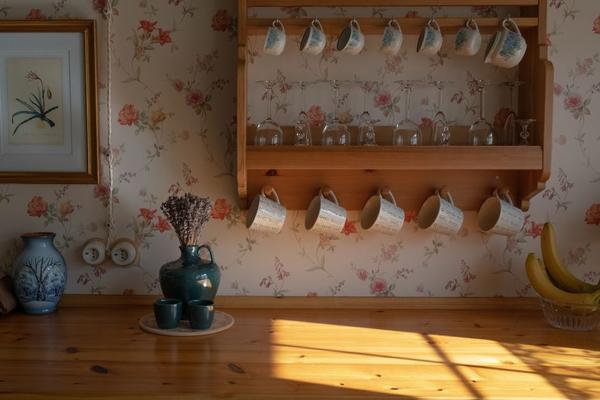
Kitchen wallpaper can look flawless until the first few weeks of frying, simmering, and washing up. Oil droplets settle near the cooker, steam finds vulnerable seams, and even a quick sauce splash can leave a lasting mark. The smartest way to protect kitchen wallpaper from grease is to reduce exposure before stains develop, rather than depend on heavy cleaning afterward.
Start by treating your kitchen as separate zones. A dining wall may only need light care; the narrow wall beside a hob needs a much tougher strategy. Better placement, a suitable surface finish, ventilation, and splash protection can work together without sacrificing the pattern you love.
Find the walls that receive the most grease
Large droplets from frying hit nearby walls, while finer cooking particles can travel farther and settle on cabinets and wallpaper. Steam can dampen seams and weaken adhesion. Check the areas behind and beside the cooker, near the sink, and around appliances that release steam.
A sticky film, darkened patch, or curling seam tells you that wall needs less exposure, not just more scrubbing. On a new kitchen project, reserve the messiest surfaces for a proper backsplash instead of expecting wallpaper to do every job.
Choose a finish designed for kitchen conditions
Vinyl-coated and solid-vinyl wallcoverings generally resist grease and moisture better than uncoated paper. Yet products vary, so check the actual care and suitability instructions rather than assuming every vinyl-looking design is equally durable.
“Washable” usually means a finish tolerates occasional gentle sponging using the prescribed cleaning solution. “Scrubbable” indicates greater cleaning tolerance under specified conditions. Look for stain-resistance information too. None of these ratings makes wallpaper heatproof or guarantees that exposed seams will withstand continuous moisture.
Delicate grasscloth and other absorbent papers are better on a dining or breakfast-nook wall. If you are still choosing materials, our guide to washable wallpaper for kitchens is a useful next step.
Keep wallpaper clear of direct heat and splashes
Placement is often the most effective grease protection for wallpaper. Avoid exposed wallpaper directly behind a stove or in another area repeatedly struck by hot oil. Follow the appliance, wallpaper, and backsplash manufacturers’ installation and clearance rules; no single distance is safe for every hob or cooker.
For example, in a compact galley kitchen, a rear frying pan may sit only a short distance from the wall. Even a wipeable print is likely to become a cleaning burden there. Extend tile, metal, or appropriately specified glass behind the cooking surface, then let the wallpaper begin outside the direct splash zone.
Add splash guards where they earn their place
Backsplashes and splash guards protect the areas where water, sauces, and oil actually land. Near a sink, a water-resistant wipeable panel may be enough. Behind or beside a cooker, materials and fixings must also meet applicable heat and fire-safety requirements.
Clear, suitably specified glass can keep a favorite pattern visible while shielding it from splashes. Its edges and installation need careful detailing so water cannot creep behind the panel. Ask a qualified installer to assess the material, sealing, and clearances around cooking equipment.
Do not assume removable plastic sheets, acrylic panels, or adhesive films can tolerate burner heat. Check their rated use. For more design combinations, explore kitchen backsplash ideas before committing to the wallpaper boundary.
Use range hood ventilation consistently
Range hood ventilation helps capture airborne cooking particles before they settle on walls. An externally vented hood generally removes more cooking pollution from the room than a recirculating model, although performance depends on installation and use.
Turn the hood on whenever you cook and, following US Environmental Protection Agency guidance, leave it running for about 10–20 minutes afterward. Use rear burners when practical to improve capture, and clean grease filters on the schedule recommended by the appliance manufacturer.
Without an outside-vented hood, an exhaust fan and an open window can help when outdoor air quality, weather, and safety allow. Ventilation tackles drifting residue, but it cannot intercept every direct splash from a pan.
Reduce mess before it reaches the wall
Keep a lid handy for simmering sauces and use a suitable splatter screen when shallow-frying. Lowering excessive heat and avoiding overcrowded pans may also reduce sudden spitting. Move kettles and steam-producing appliances away from wallpaper seams where possible.
Wipe grease promptly from the backsplash or other approved hard surface so buildup does not spread. If condensation regularly collects on the wallpaper, improve ventilation and address the moisture source instead of coating over the damp patch.
Keep wallpaper clean without wearing it out
Good kitchen wallpaper maintenance starts with the manufacturer’s cleaning instructions. For a washable finish, use a soft, barely damp cloth and an approved mild solution when needed. Test a hidden spot first and dry the area gently. The goal is to remove light residue without soaking edges.
Avoid abrasive pads, harsh degreasers, steam cleaners, and heavy scrubbing unless explicitly permitted. These can damage a protective coating, blur printed details, or force moisture beneath the paper. Non-washable wallpaper may allow only gentle dry dusting.
Inspect corners and seams periodically. A lifting edge deserves attention before grease or water gets behind it. For stain-specific techniques, see our guide to how to clean wallpaper without damaging the finish.
Protection mistakes that create new problems
Applying generic clear varnish over existing wallpaper can change its sheen, affect the print, trap moisture, or make removal difficult. Only use a coating when the wallpaper and coating manufacturers confirm compatibility for that location.
Another mistake is assuming “wipe clean” means suitable for direct stove heat. And a powerful extractor does not replace a safe, wipeable backsplash: airborne grease and physical splashes are separate problems. Combine sensible placement, appropriate materials, and routine care instead of relying on one fix.
Frequently asked questions
Can wallpaper go directly behind a stove?
Exposed wallpaper is generally a poor choice where hot grease and cooking heat reach the wall. Use an appropriately rated backsplash and follow manufacturer clearance and safety requirements.
Does washable wallpaper prevent grease stains?
It makes some marks easier to remove but is not permanently greaseproof. Check its stain-resistance rating, protect the splatter zone, and clean only as directed.
Will a range hood protect wallpaper completely?
No. A well-maintained hood can reduce airborne deposits, especially if it vents outdoors. It cannot stop oil or sauce that splashes directly onto a wall.
Should I seal kitchen wallpaper with a clear coat?
Only use a coating confirmed compatible by the relevant manufacturers. Sealing does not make wallpaper safe beside open flames or protect it against constant water exposure.
Let the right surface handle the hard work
Wallpaper brings personality to the kitchen, but it does not need to take the full force of cooking. Place it beyond heavy splash zones, choose a suitably washable finish, install safe splash protection, and use extraction every time you cook. A few gentle maintenance habits will do more for the finish than aggressive cleaning after grease has built up.