There was a time when wallpaper felt like a commitment you might regret. Patterns aged quickly, removal was messy, and trends moved faster than walls could keep up. But something has shifted. Today, Modern Living Room Wallpaper feels less like a permanent decision and more like a creative expression—fluid, personal, and surprisingly adaptable.
Step into any thoughtfully designed living space in 2026, and you’ll notice how wallpaper is no longer just a backdrop. It’s a statement. It shapes mood, defines zones, and quietly tells a story about the people who live there.
The Return of Wallpaper as a Design Statement
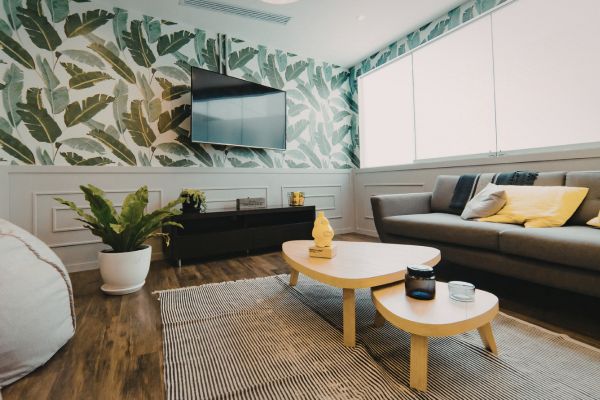
Wallpaper has come back, but not in the way many people remember. Instead of covering every wall, it’s often used with intention. A single accent wall, a framed panel, or even a ceiling application can transform a room without overwhelming it.
What makes modern wallpaper especially appealing is its versatility. You can go bold without committing your entire living room to a dramatic pattern. Or keep things subtle and still achieve depth and texture that paint alone simply can’t offer.
In many homes, wallpaper now plays the role that artwork once did—it becomes the focal point, drawing attention and setting the tone for everything else in the room.
Natural Textures That Bring Calm Indoors
One of the strongest trends in Modern Living Room Wallpaper for 2026 is the embrace of natural textures. As homes continue to double as retreats from busy, digital lives, people are leaning toward materials and patterns that feel grounded.
Grasscloth-inspired finishes, linen-like surfaces, and softly woven visuals are everywhere. These designs don’t shout for attention. Instead, they create a quiet backdrop that enhances light and adds warmth.
There’s something almost instinctively comforting about these textures. They mimic elements from nature without trying too hard, making living rooms feel more relaxed and lived-in.
Subtle Patterns with a Soft Presence
Not every wallpaper needs to make a bold statement. In fact, some of the most appealing designs right now are the ones that reveal themselves slowly.
Think of gentle geometric repeats, tonal stripes, or barely-there botanical prints. These patterns are designed to be noticed over time rather than at first glance. They add movement to walls without creating visual noise.
This approach works particularly well in smaller living rooms, where too much contrast can feel overwhelming. A subtle pattern can expand the sense of space while still adding personality.
Bold Murals That Tell a Story
At the opposite end of the spectrum, large-scale murals are having a moment—and they’re not shy about it.
Instead of repeating patterns, murals often depict scenes: abstract landscapes, oversized florals, or even artistic interpretations of cityscapes. They turn an ordinary wall into something immersive, almost like stepping into a painting.
The key to making this trend work is balance. When one wall carries so much visual weight, the rest of the room needs to breathe. Neutral furniture, simple textiles, and thoughtful lighting allow the mural to shine without overwhelming the space.
Earthy Color Palettes Take Center Stage
Color trends for wallpaper in 2026 are moving away from stark contrasts and toward earthy, grounded tones. Shades like clay, olive, sand, and muted terracotta are becoming more common.
These colors work beautifully in living rooms because they feel both modern and timeless. They don’t date quickly, and they adapt easily to seasonal changes in decor.
Even when patterns are involved, the color palette tends to stay restrained. This creates a sense of cohesion, making the room feel intentional rather than overly styled.
Metallic Accents with a Refined Edge
While bold metallics once dominated interior trends, today’s approach is far more restrained.
Modern wallpaper often incorporates delicate metallic details—thin lines, subtle sheens, or barely reflective surfaces. These elements catch the light in a quiet way, adding dimension without turning the wall into a mirror.
In a living room, this can be especially effective in the evening. As lighting changes, the wallpaper subtly shifts in appearance, giving the space a dynamic quality that evolves throughout the day.
The Rise of Custom and Personalized Designs
Another defining feature of Modern Living Room Wallpaper is the move toward personalization. Homeowners are increasingly choosing designs that reflect their individual tastes rather than following generic trends.
This might mean selecting a pattern that echoes a favorite landscape, choosing colors that match a meaningful piece of furniture, or even commissioning custom designs.
There’s a sense that living rooms are becoming more narrative-driven. The wallpaper isn’t just decoration—it’s part of the story of the home.
Mixing Wallpaper with Other Wall Treatments
Wallpaper no longer has to stand alone. One of the more interesting trends in 2026 is the combination of wallpaper with other materials.
You might see wallpaper paired with wood paneling, painted sections, or even textured plaster. This layered approach creates depth and breaks up large walls into more visually engaging sections.
It also allows for greater flexibility. If you love a bold pattern but worry about it being too much, combining it with a solid surface can strike the perfect balance.
Practical Considerations for Modern Homes
While aesthetics are important, practicality hasn’t been overlooked. Many modern wallpapers are designed with everyday living in mind.
Peel-and-stick options have made installation and removal much easier, especially for renters or those who like to update their space frequently. Washable surfaces are also becoming more common, which is particularly useful in living rooms where walls can see a lot of activity.
Durability has improved as well. Today’s wallpapers are less prone to fading and wear, making them a more reliable long-term choice.
Lighting and Wallpaper: An Overlooked Partnership
Lighting plays a significant role in how wallpaper is perceived. The same design can look entirely different depending on how light interacts with it.
Natural light tends to soften patterns and reveal subtle textures, while artificial lighting can enhance contrast and bring out metallic elements. This is why it’s worth considering how your living room is lit throughout the day before choosing a wallpaper.
Sometimes, the most beautiful designs are the ones that change slightly as the light shifts, adding a layer of visual interest that feels almost alive.
Creating Balance in a Wallpapered Living Room
One of the biggest challenges with wallpaper is knowing how to balance it with the rest of the room. Too much pattern can feel overwhelming, while too little can make the design seem disconnected.
The key is to let the wallpaper guide your choices. If it’s bold, keep furniture and accessories relatively simple. If it’s subtle, you have more freedom to introduce contrasting elements.
Textures also play a role here. Pairing a smooth wallpaper with soft fabrics, or a textured wall with sleek furniture, creates a sense of harmony that feels intentional.
Why Wallpaper Feels Relevant Again
Perhaps the most interesting aspect of Modern Living Room Wallpaper is why it resonates so strongly right now.
In a world where digital experiences dominate, there’s a growing desire for tactile, physical environments. Wallpaper offers something you can see and almost feel—a layer of depth that screens simply can’t replicate.
It also allows for creativity without major structural changes. You can transform a room in a matter of hours, giving it a completely new identity without tearing anything down.
Conclusion: A Personal Canvas for Modern Living
Modern living room wallpaper in 2026 isn’t about following strict design rules. It’s about creating spaces that feel authentic, comfortable, and visually engaging.
Whether you’re drawn to soft textures, bold murals, or understated patterns, the beauty of wallpaper lies in its flexibility. It can adapt to your style, evolve with your tastes, and bring a sense of character to even the simplest room.
In the end, wallpaper has become more than just a design choice. It’s a way of shaping how a living room feels—how it welcomes you at the end of the day, how it reflects your personality, and how it quietly transforms the everyday into something a little more considered.