Bathrooms are hard on wall finishes. Water splashes around the sink, damp towels brush against walls, hands leave marks, and steam can raise humidity quickly. That makes washability more than a nice extra when choosing wallpaper. A good bathroom wallcovering should tolerate routine cleaning without its surface dulling, its inks lifting, or its seams becoming vulnerable.
The key is to look beyond a product simply being described as “bathroom wallpaper.” Check its cleaning rating, surface material, resistance to moisture and stains, and the manufacturer’s installation guidance. Those details tell you far more about everyday performance than pattern or colour alone.
Start With the Cleaning Rating
Wallpaper labels often distinguish between washable and scrubbable finishes. The Wallcoverings Association defines washable wallcoverings as products that can withstand occasional sponging with a prescribed detergent solution, while scrubbable products are intended to tolerate more vigorous cleaning. That difference matters around basins, toilets, and family wash areas where fingerprints, toothpaste, cosmetics, and splashes are common.
For a lightly used bathroom, a genuinely washable surface may be enough. In a busy family bathroom, scrubbable wallpaper is usually the more practical choice. Always check the actual care symbol or manufacturer specification rather than assuming that “wipeable” and “washable” mean the same thing.
Vinyl and Vinyl-Coated Surfaces Are Often Practical
Washable vinyl wallpaper is popular in bathrooms because its decorative face is less absorbent than untreated paper and can offer better resistance to moisture and staining. Vinyl-coated paper and solid vinyl wallcoverings are commonly sold for rooms that need easier cleaning.
That does not mean every vinyl product belongs in every wet location. Wallpaper is a wall finish, not a waterproof membrane. A splash resistant wallpaper may work well beside a vanity or on a wall across from a shower, yet still be a poor choice inside a shower enclosure or anywhere it is routinely soaked.
Natural internal-link topics here include bathroom wall finish options and types of wallpaper materials.
Match the Wallpaper to Its Location
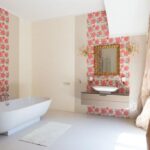
The same roll can perform very differently depending on where it sits. A wall near the door may only face humidity, while the wall behind a sink receives direct droplets several times a day. A wall beside a freestanding tub may be occasionally splashed, while a shower wall faces repeated water contact.
A practical way to choose cleanable bathroom wallpaper is to match the finish to the hardest condition it will regularly face. If children use the basin and splash the wall every morning, choose a more durable, scrubbable surface rather than a delicate paper that is merely described as wipeable.
Ventilation Matters Too
Even highly cleanable wallpaper can struggle in a bathroom that stays damp for long periods. Steam condenses on cooler walls and can work into seams, edges, or imperfectly prepared surfaces. Good ventilation helps the room dry faster and reduces the amount of moisture sitting on the wallcovering.
Use an effective exhaust fan where one is available, and allow air to circulate after showers. If the room regularly has heavy condensation on mirrors and walls long after bathing, address that moisture issue before installing wallpaper. A related internal-link topic is reducing bathroom condensation.
Check the Surface Finish Before Buying
When possible, order a sample and test how the surface feels and cleans. Smooth coated finishes are generally easier to wipe than deeply textured papers because dirt and residue have fewer recesses to settle into. Matte or embossed surfaces can still be suitable, but their care instructions matter more.
Look for a product description that clearly states how it should be cleaned. A vague promise such as “easy care” is less useful than a stated washable or scrubbable classification. Also check whether the manufacturer recommends a specific cleaner. Strong solvents, abrasive pads, and aggressive sprays can damage printed or coated surfaces even when the wallpaper is designed to be cleaned.
Installation Quality Affects Cleanability
A washable face cannot compensate for poor wall preparation or weak seams. Bathrooms need a sound, dry, smooth substrate. Flaking paint, mildew, active leaks, or soft plaster should be corrected first. Follow the manufacturer’s instructions for primer, paste, and seam treatment because those details vary by product.
Pay particular attention around sinks and splash-prone edges. If water repeatedly gets behind a loose seam, the problem is no longer just surface cleaning. Neat trimming, firmly bonded edges, and a properly prepared wall help the finish behave as intended.
What to Avoid
Be cautious with untreated paper that has little or no stated washability, absorbent natural materials in splash zones, products that prohibit normal damp wiping, delicate printed finishes that mark easily, and any wallpaper proposed for a wall with unresolved damp, leaks, or recurring mildew.
Also avoid treating “washable” as permission to soak the wall. Routine cleaning should use as little moisture as practical, following the maker’s instructions. Wipe splashes promptly rather than allowing water to sit along seams.
A Simple Buying Checklist
Before ordering, confirm that the wallpaper has a clear washable or scrubbable rating, its surface material suits a humid room, the intended wall is outside areas of repeated saturation, the room has adequate ventilation, and the manufacturer provides compatible installation and cleaning instructions.
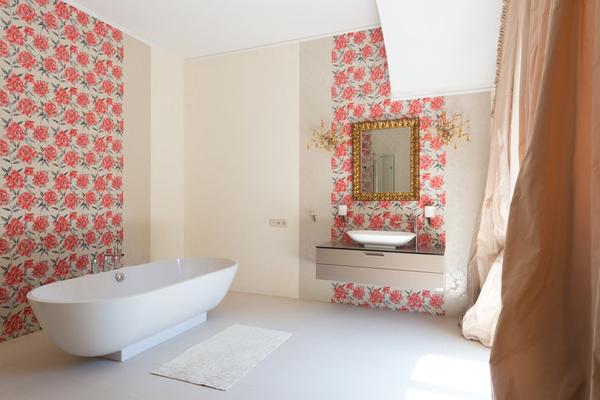
For example, imagine two wallpapers with nearly identical botanical prints. One is an uncoated paper with limited cleaning guidance. The other is a scrubbable vinyl-coated product approved by its manufacturer for bathrooms. On a vanity wall used by a family every day, the second option is the safer practical choice even if both look equally suitable in a showroom.
FAQ
Is washable wallpaper waterproof?
No. Washable wallpaper is designed to tolerate specified cleaning, but that does not make it waterproof. Keep standard wallpaper away from locations where it will be repeatedly soaked unless the manufacturer specifically approves that application.
Is scrubbable wallpaper better than washable wallpaper for a bathroom?
Often, yes. Scrubbable wallpaper is intended to tolerate more intensive cleaning than a merely washable finish, making it useful in busy bathrooms and around splash-prone areas. The exact care method still depends on the manufacturer.
Can I use washable wallpaper behind a bathroom sink?
It can work if the product is suitable for bathrooms, the wall is properly prepared, and splashes are wiped away promptly. For a sink that constantly wets the wall, a more water-resistant hard finish may be better.
Does peel-and-stick wallpaper work in bathrooms?
Some peel-and-stick products are marketed for bathrooms, but suitability varies. Check the manufacturer’s humidity, surface-preparation, temperature, and cleaning instructions rather than assuming all self-adhesive wallpaper can handle steam and splashes.
Choose for the Cleaning Your Bathroom Actually Needs
The best washable wallpaper for bathrooms is the one whose cleaning rating, surface construction, location, and installation requirements fit the way your room is used. For a low-splash powder room, washable may be enough. For a busy family bathroom, a scrubbable vinyl or vinyl-coated finish can be the more forgiving option.
Choose the wall location carefully, keep the room well ventilated, follow the care instructions, and deal with splashes before they become a repeated moisture problem. Done well, wallpaper can give a bathroom colour and character without turning routine cleaning into a worry.