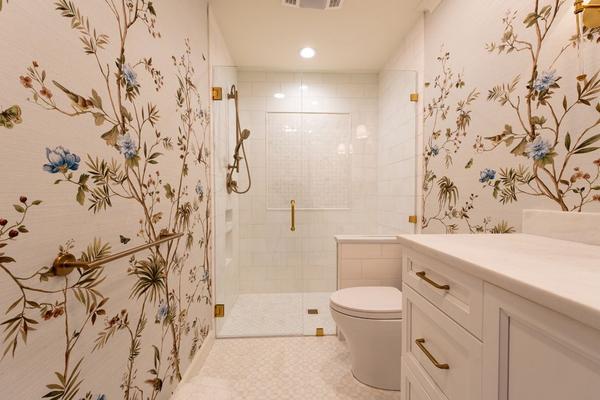
Bathroom wallpaper above tile offers a practical middle ground: wipeable surfaces where splashes happen and pattern where walls stay relatively dry. The look can soften an all-tile bathroom without asking wallpaper to behave like a shower surround. Success depends on where the finishes meet, how their edges are handled, and whether the room can shed moisture.
Start With the Wettest Part of the Room
Before choosing a pattern, watch how the bathroom is used. Water travels farther than a neat diagram suggests. Children splash at the basin, handheld showers spray sideways, and condensation can form on cooler walls even without direct contact.
Tile should cover surfaces regularly exposed to water, including shower enclosures and areas around tubs used for showering. Wallpaper belongs on upper walls receiving occasional humidity rather than repeated soaking. A tiled bathroom wallpaper scheme works best when this division drives the layout.
Being above the tile line does not automatically mean a surface stays dry. Poor ventilation can leave upper walls damp long after bathing.
Where Should the Tile-to-Wallpaper Line Sit?
There is no universal height for bathroom wallpaper above tile. Traditional tiled wainscoting may finish around waist height; a busy sink wall might need higher protection. Choose the line based on fixtures, splash patterns, and visual proportions rather than an arbitrary measurement.
Above a Basin or Vanity
Notice where water lands when someone washes their face or wipes the counter. If the backsplash is only a few inches high, wallpaper immediately above it may be vulnerable. Taller tile behind the sink can establish a safer transition. A low-splash powder room may need less protection.
Beside a Bathtub or Shower
Keep wallpaper away from direct spray, including walls regularly wetted by open showers or bath users. Check the area beside a shower screen after normal use. If it gets wet repeatedly, extend tile or another approved water-resistant finish; surface sealer cannot turn ordinary wallpaper into waterproofing.
On Other Bathroom Walls
On walls away from fixtures, wallpaper above wainscoting can begin at a consistent height around the room. Mark the proposed line with painter’s tape, then view it from the doorway and vanity before committing.
Make the Bathroom Wall Transition Look Deliberate
The meeting point should look finished, not like one installer simply stopped. A slim tile trim, ceramic cap, or suitable painted molding can define the boundary. Choose a profile compatible with the tile thickness and the room’s style.
Where practical, align the transition with an existing detail such as a window sill. Avoid cutting awkwardly through a switch plate or prominent wallpaper motif. A small shift in tile height before installation can make a noticeable difference.
Let the finishes share a color. Pick a subtle hue from the wallpaper to echo in grout, cabinetry, or tile. Strong patterns often look better alongside simple tiles. Compare samples in the bathroom’s actual lighting, not just on a phone screen.
Choose Wallpaper for Humidity, Not Just Pattern
Some vinyl-coated and other washable wallcoverings resist moisture better than untreated paper, but manufacturer specifications matter more than marketing labels. Washable does not mean waterproof or suitable for direct shower spray.
Check product guidance on room suitability, adhesive, wall preparation, and cleaning. Be cautious with uncoated grasscloth, natural fibers, and paper that stains when wet. Even moisture-tolerant wallpaper can fail if water becomes trapped behind it.
Peel-and-stick products also vary. Their adhesives can respond differently to humidity, temperature, and paint finishes. Test a sample and follow the manufacturer’s instructions before covering a full wall.
Prepare the Wall and Finish Exposed Edges
Wallpaper needs a sound, clean, dry, and appropriately primed surface. Repair peeling paint, remove residues, and investigate stains or recurring damp patches first. Never cover an active leak or mold problem; fix its moisture source before decorating.
Where wallpaper meets tile, use a stable, straight cap or trim. Cut the paper neatly at the finished boundary according to its installation instructions, without leaving a loose lower edge that can absorb cleaning water.
Do not automatically caulk the wallpaper edge. Some sealants stain decorative surfaces or fail to adhere properly. Ask the manufacturer about compatible edge treatments if extra protection is needed. Remember that the tiled wet zone requires its own appropriate waterproofing system.
Ventilation Is Part of the Design
A functioning exhaust fan vented outdoors removes moisture created by showers and baths. Use it while bathing and afterward until humidity and visible condensation subside. An open window can help when conditions permit, but should not substitute for fixing persistent dampness.
Look for condensation on the wallpapered wall, musty odors, or lifting seams. Such signs call for improved moisture control and inspection, not just more adhesive. Keep harsh cleaning products off wallpaper unless its manufacturer allows them.
A Practical Layout for a Small Family Bathroom
Imagine a compact bathroom with a vanity opposite a bathtub and shower. The shower enclosure remains fully tiled, and tile continues high enough behind the vanity to protect its splash zone. Wallpaper adds pattern above the vanity tile and on the wall farthest from spray.
Instead of forcing the same low tile line everywhere, use a corner or architectural break to transition between differently protected areas. Tape out the proposed boundaries. After several normal showers, check where nearby walls collect splashes or condensation. That observation is more useful than copying a height from a photograph.
Frequently Asked Questions
Can you put wallpaper directly above bathroom tiles?
Yes, provided the upper wall is dry, sound, reasonably ventilated, and outside regular splash zones. Finish the tile edge neatly and choose a wallcovering suited to the room’s conditions.
Is vinyl wallpaper waterproof in a bathroom?
No. Certain vinyl or vinyl-coated wallcoverings resist moisture and cleaning better than ordinary paper, but that does not make the wall assembly waterproof. Keep them outside continuously wet shower areas.
Must wallpaper and tile meet at the same height on every wall?
No. A consistent line can look cohesive on dry walls, but splash protection at sinks and showers takes priority. Corners, trims, or other architectural breaks can help manage different heights.
What if wallpaper seams peel near the tile?
Check for splashes, condensation, or hidden dampness before repairing them. Correct the moisture problem, let the surface dry, and follow the manufacturer’s repair advice. Re-gluing a wet seam alone will not last.
Keep the Pattern High and the Protection Where It Counts
The most successful bathroom wallpaper above tile projects do not depend on one perfect transition height. They put tile where water regularly reaches, keep wallpaper in drier zones, and turn the boundary into a considered design detail. Good preparation and reliable ventilation help the finished room stay attractive through everyday use.