A bathroom wallpaper accent wall can make a compact room feel thoughtfully designed without covering every surface in pattern. The trick is choosing a wall that catches the eye but stays reasonably dry. A striking print behind the vanity may look perfect in a photograph; if that wall takes constant splashes, it might not be the smartest location. Start with how water moves through your bathroom, then decide where the design belongs.
Wallpaper works best as decoration, not a substitute for tile, waterproof panels, or a properly built shower surround. With sensible bathroom wallpaper placement and a product approved for humid rooms, one feature wall can add personality while leaving hard-working surfaces easy to clean.
Which Bathroom Wall Should You Wallpaper?
Behind the vanity, with a protected splash zone
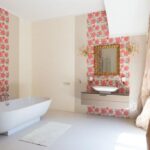
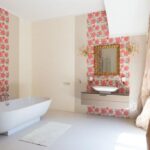
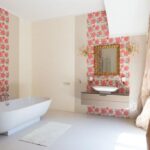
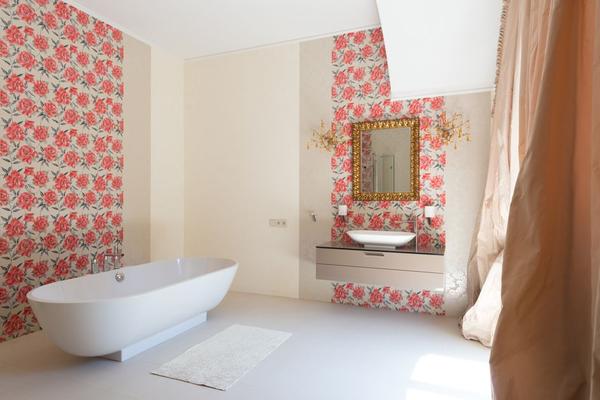
A vanity accent wall is a strong visual choice because the mirror, lighting, and sink already create a focal point. Wallpaper frames a round mirror beautifully or gives a plain floating vanity more presence. However, the area directly behind the faucet needs protection.
Use tile, stone, glass, or another suitable backsplash where water regularly lands. Begin the wallpaper above that area if the layout allows. Consider the faucet’s reach and the sink’s depth. A shallow basin used by children creates a different splash pattern from a deep guest-bath sink.
Behind the toilet
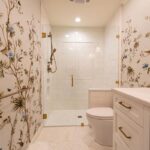
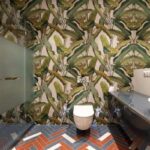
The wall behind a toilet is often a practical bathroom feature wall, especially in a powder room. It usually receives less direct water than the sink wall, and the upper section can carry a bold botanical or geometric design.
Consider how the toilet, shelving, and flush controls affect the pattern. A large motif may disappear behind a storage cabinet. If condensation collects here after showers, improve ventilation before installing wallpaper.
The wall visible from the doorway
Sometimes the most attractive accent wall is simply the one you notice first. A relatively dry wall opposite the entrance creates impact without competing with a mirror. In a long bathroom, wallpaper at the far end offers a visual destination.
Stand in the doorway and check where the shower opens and towels hang. The best-looking wall is not automatically the driest one.
Near a tub or shower
Do not mistake moisture-tolerant wallpaper for a waterproof shower finish. Inside a shower, directly around a regularly splashed tub, or beside an open shower entrance, tile or an approved waterproof system is safer. Spray can reach beyond a shower screen.
A wall farther away may be suitable if it stays dry during normal use and the manufacturer permits humid-room installation. When unsure, use the opposite wall or paper above a protective paneled section.
Best Materials for a Moisture Resistant Accent Wall
Washable vinyl or vinyl-faced wallpaper
For many full bathrooms, bathroom-rated vinyl is a practical starting point. Its wipeable finish generally handles occasional moisture and cleaning better than untreated paper. Check the manufacturer’s instructions on humidity, adhesive, and permitted locations. A washable label does not mean the product can withstand direct water exposure.
Coated non-woven wallpaper
Some non-woven products are designed for humid interiors; others are not. Check the complete specification rather than assuming the backing alone makes wallpaper bathroom-safe. A suitable coated surface, compatible paste, sound wall preparation, and ventilation all matter.
Peel-and-stick wallpaper
Removable wallpaper appeals to renters, but adhesive performance varies. Some products are approved for humid rooms; others can lift with steam or condensation. Confirm that the intended wall surface and paint meet the manufacturer’s requirements. Removable does not automatically mean bathroom-safe.
Uncoated paper, grasscloth, and absorbent specialty finishes are poor choices for busy shower bathrooms. Consider them only in reliably dry powder rooms when the manufacturer approves that setting.
Test the Wall Before You Order
One normal shower provides useful clues. Inspect the intended surface afterward and ask three questions: Does water strike it directly? Does condensation make it visibly wet? Does the room dry out with the exhaust fan operating?
If spray reaches the wall, relocate the wallpaper or protect the area with an appropriate waterproof finish. If condensation persists, address humidity before decorating. Bathroom fans should exhaust outdoors, and plumbing leaks or damp patches need repair before any wall is covered.
Picture a family bathroom with a tub-shower on one side and a vanity opposite. Wallpaper behind the mirror looks attractive, but splashing at the basin creates a vulnerable lower section. A tiled backsplash with coated wallpaper above can be a better design if the upper wall remains dry. If shower condensation still wets it, choose another wall.
Installation Details That Matter
Start with a clean, smooth, completely dry wall. Repair cracks and damaged plaster, investigate stains, and resolve the cause of any mold rather than covering it. Follow the wallpaper maker’s primer and adhesive recommendations, which may differ from products suitable for a bedroom.
Measure around mirrors, outlets, and vanity edges. Allow for pattern matching and offcuts, especially with large prints. Position the first strip carefully so the main motif falls where you want it. Follow the stated drying time and avoid heavy steam while the covering cures.
Don’t add varnish, caulk, or seam treatments merely because a tutorial suggests them. Extra products can change the finish or introduce compatibility problems. Use only approved treatments, run effective ventilation after showers, and clean the surface according to the care instructions.
Make One Wall Look Deliberate
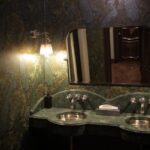
Let wallpaper be the room’s main statement. A medium-scale pattern may read more clearly in a small room than a busy miniature print. Dark backgrounds feel dramatic with good lighting; vertical motifs pull the eye upward. Test a sample in daytime and artificial light.
Choose a quiet color from the print for surrounding painted walls. Repeating a finish from the mirror frame or vanity helps the pattern feel connected. Related ideas worth exploring include bathroom paint colors for small spaces, bathroom mirror lighting ideas, and small bathroom storage solutions.
Frequently Asked Questions
Can you wallpaper a bathroom with a shower?
Yes, on a normally dry wall if the product is approved for humid rooms and ventilation is effective. Keep ordinary wallpaper outside direct spray zones. The shower itself still needs a waterproof wall finish.
Is vinyl wallpaper waterproof?
Not necessarily. Many vinyl-faced papers resist occasional moisture, but their seams, adhesive, and underlying wall may not be waterproof. Follow the product’s placement and cleaning instructions.
Should wallpaper go behind a bathroom sink?
It can work above a suitable backsplash where splashing is limited. Use tile or another splash-resistant finish wherever water regularly hits the wall.
Is the toilet wall a good accent wall?
Often, yes. Its upper area can form a focal point with relatively little direct splashing. Check condensation and how shelves or cabinets interrupt the pattern.
Choose the Dry Wall, Then the Bold Print
The best bathroom wallpaper accent wall balances visual impact with daily use. Pick a prominent surface outside routine splash zones, verify that the material suits the room, and solve ventilation problems first. That gives you the freedom to enjoy a confident pattern without asking wallpaper to do the job of waterproof tile.