
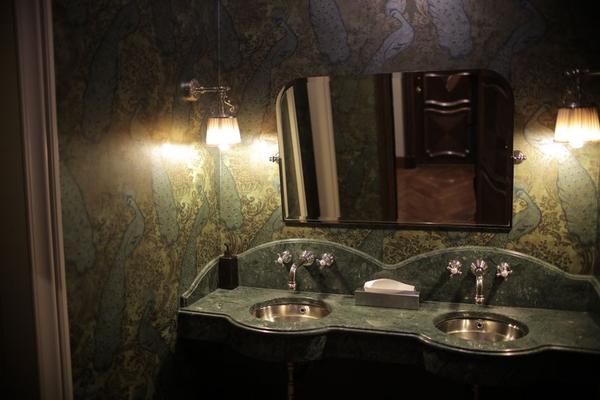
Wallpaper behind a bathroom sink can look beautiful until regular handwashing leaves a dotted outline around the faucet. The real problem is not simply bathroom humidity. It is repeated splashing that reaches seams, cut edges, and adhesive. Fortunately, you can keep a patterned vanity wall without exposing the most vulnerable section to water. The key is to map the splash zone first, protect it appropriately, and use wallpaper where it can stay reasonably dry.
Can You Put Wallpaper Behind a Bathroom Sink?
Yes, with an important condition: wallpaper should not be the only protection where water regularly strikes the wall. Even wipeable vinyl is generally water-resistant, not a replacement for a waterproof backsplash. Wallcovering manufacturers commonly recommend keeping wallpaper away from direct splashes around basins and showers.
Consider the wall in two parts. The working zone immediately behind the basin needs dependable sink splash protection. The decorative zone above or beside it is a much safer place for wallpaper behind vanity units.
Map the Splash Zone Before Choosing a Backsplash
No fixed backsplash height works for every sink. A high faucet over a shallow vessel basin may throw droplets farther than a low tap over a deep inset basin. The faucet’s distance from the wall, water pressure, and everyday habits also affect exposure.
Try a practical splash test
For two days, use the sink normally: wash hands, brush teeth, and rinse the basin. Inspect the painted wall after each activity and note the highest and widest splash marks. If needed, place removable markers on a suitable dry surface. Design your protective section to extend beyond these repeated wet areas, rather than simply copying the height of a backsplash you saw in a photograph.
For example, a compact powder room with a wall-mounted faucet and shallow basin may need protection extending wider than the sink itself. By contrast, a deeper basin set forward from the wall may keep much of the spray on the countertop. Watch where the water actually travels.
Choose Wallpaper That Suits a Bathroom
Understand the limits of washable finishes
Solid vinyl and vinyl-coated wallpaper can be good choices for humid rooms because many versions are wipeable. Check the specific product’s washability rating and installation guidance. A washable surface may tolerate occasional damp cleaning, but water can still get into seams or behind loose edges. Do not confuse moisture resistance with suitability for continuous direct wetting.
Be careful with delicate and removable papers
Grasscloth, uncoated paper, and heavily textured coverings can collect residue or stain near a vanity. Peel-and-stick wallpaper may also struggle if steam and moisture affect its adhesive. Unless the manufacturer specifically approves the location, use these finishes on a drier wall or above a protective backsplash.
Pattern matters less than performance. A busy print might hide small marks, but it cannot prevent peeling. For bathroom backsplash wallpaper, the placement and the product’s care instructions matter more than the design’s appearance.
Ways to Protect the Wall Behind the Sink
Install a durable backsplash below the wallpaper
Tile, solid-surface material, or another suitable water-tolerant finish provides a cleanable barrier where splashes are most common. Wallpaper can begin above it, creating an attractive contrast between a practical lower surface and a patterned upper wall. Ensure the backsplash extends beyond the observed splash area and that its joints are finished according to the material manufacturer’s instructions.
Use a correctly fitted transparent panel
A clear glass panel can preserve the appearance of vanity wall wallpaper while shielding it from routine splashes. Specify appropriate safety glazing and fixings. Ask the installer how edges, penetrations, and the junction with the countertop will be detailed to keep water from becoming trapped behind the panel. A loose sheet placed over wallpaper is not automatically a waterproof installation.
Raise the wallpaper above the wettest area
A taller backsplash can be the simplest answer when the faucet sprays high up the wall. Starting wallpaper farther above the countertop feels deliberate, especially when you carry the protected surface across a double vanity. Keep the visual break level and align it with nearby mirrors or cabinets where that suits the room.
Consider coatings only when compatible
Some wallpaper systems allow a specific clear protective coating, but applying generic varnish is risky. A coating might change the color or sheen, fail to bond, or leave vulnerable seams. Check with both manufacturers and test an offcut. Even an approved coating is not a substitute for a physical backsplash in an area repeatedly hit by water.
Installation Details That Affect Longevity
Start with a clean, dry, sound wall. Repair leaks and persistent dampness before hanging wallpaper; covering a moisture problem only conceals it. Follow the wallcovering manufacturer’s requirements for primer, adhesive, surface preparation, and drying time. A bathroom-rated adhesive does not make the wallpaper itself waterproof.
Avoid placing vulnerable cut edges directly against wet countertops or fixtures. Pay attention to corners, mirror edges, and gaps around plumbing. Where the backsplash meets the counter, use the joint treatment specified for that combination of materials and maintain it when necessary. Water entering behind the finish can cause damage even when the visible wallpaper surface looks intact.
Ventilation also matters. Run an exhaust fan during and after bathing, or use suitable window ventilation to reduce lingering humidity. If you’re planning a larger refresh, related guides on bathroom wallpaper for humid rooms, choosing bathroom backsplash materials, and preparing walls for wallpaper offer useful next steps.
How to Maintain Wallpaper Near a Sink
Wipe stray droplets promptly with a method approved for the surface. Avoid harsh sprays, abrasive pads, and soaking wallpaper seams. Check occasionally for lifted edges, bubbling, discoloration, or a musty smell. Investigate the source of moisture before attempting cosmetic repairs. If one strip continually gets wet, replacing that section with a more durable backsplash is usually better than repeatedly reattaching it.
Frequently Asked Questions
Is waterproof wallpaper enough behind a bathroom sink?
Not necessarily. Marketing terms differ, and even water-resistant finishes can have vulnerable joints and adhesives. Follow the manufacturer’s location guidance and use suitable splash protection wherever water repeatedly reaches the wall.
How high should a sink backsplash be?
There is no universal height. Choose coverage according to the basin, faucet, and actual splash pattern. Test normal sink use and allow some extra coverage beyond the highest regular droplets.
Can I place clear glass over wallpaper behind a vanity?
Yes, if the system is properly designed and fitted. Use suitable glass and safe fixings, and make sure the edge details prevent water from collecting behind it. Professional advice is especially useful around outlets or complex fixtures.
Will sealing ordinary wallpaper make it washable?
Only use a coating if the wallpaper and coating manufacturers approve the combination. Test it first and understand that added stain resistance is not the same as waterproof protection.
Let the Wallpaper Decorate, Not Defend
The most successful bathroom wallpaper behind sinks uses different finishes for different jobs. A cleanable barrier handles everyday spray, while wallpaper brings color and character to the less exposed wall. Measure where splashes land, select products suited to the location, and make the details easy to clean. That thoughtful separation helps the entire vanity look better for longer.