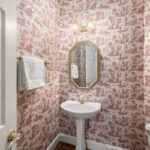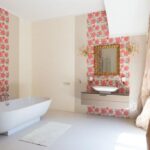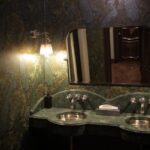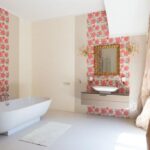
In a small bathroom, wallpaper is never just background. A few square feet of pattern can shape the entire room, especially when the mirror reflects it and the walls sit close to the fixtures. The challenge is finding a design that adds character without making the space feel crowded—or choosing a beautiful print that cannot tolerate the room’s moisture.
Start With the Bathroom You Actually Have
Before comparing prints, notice where water lands. A powder room used mainly for handwashing is different from a windowless family bathroom with daily hot showers. In the first, there may be several suitable walls. In the second, the safest wallpaper location could be a single dry wall well away from the shower and sink.
Also stand in the doorway. What do you see first: the wall behind the toilet, a vanity, or a long side wall? That first sightline often matters more than the room’s square footage. Wallpaper placed there can create a focal point without competing with every fixture.
Choose Pattern Scale by Viewing Distance, Not Room Size
Small prints are not automatically more calming
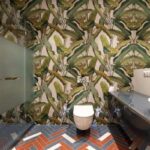
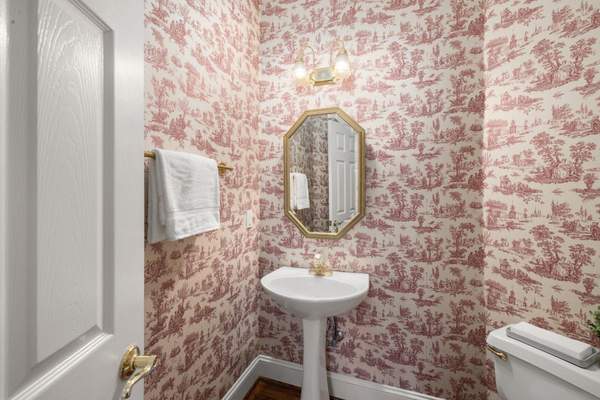
Tiny florals, dense dots, and tightly repeated geometrics can look busy at arm’s length. A larger botanical with open space between leaves may actually feel quieter, even in a compact room. The useful question is how often the motif repeats across the wall you will see most.
For compact bathroom patterns, compare a sample from the doorway and from the sink. If the design dissolves into visual noise up close, try a more open repeat or softer contrast. If a large motif gets chopped awkwardly by the mirror, a smaller repeat may make more sense.
Let one feature do the talking
Bold wallpaper works best when nearby surfaces give it breathing room. Pair an expressive print with simple towels, a restrained countertop, and solid-color paint or tile. A design with a clear background color also makes it easier to coordinate the vanity and trim.
Order the largest sample available and tape it vertically to the intended wall. Check it in daylight and under the bathroom light; warm bulbs can change how greens, pinks, and whites appear. For more guidance, compare bathroom lighting ideas before committing to a color-heavy print.
Use Placement to Control Both Impact and Splash Risk
A wall behind the toilet, above a dry section of paneling, or opposite the shower can be a strong candidate for small bathroom wallpaper. Wallpaper directly inside a shower, behind a frequently splashed faucet, or beside a tub where water regularly hits the wall is generally the wrong material for the job, even when its label mentions moisture resistance.
One practical strategy is to install tile or water-tolerant paneling on the lower portion of a wall and paper the drier area above it. The transition creates a natural visual break while protecting surfaces more likely to be splashed. Follow the wallpaper manufacturer’s guidance on suitable locations rather than assuming a particular height guarantees safety.
A compact-bath example
Picture a 5-by-7-foot bathroom with a white vanity just inside the door and a toilet on the back wall. Instead of covering all four walls, place a leafy print behind the toilet, then pick a muted green from the print for the remaining painted walls. Keep the sink backsplash tiled. The eye gets a destination, but the highest-contact surfaces remain easy to maintain.
Understand What Moisture Resistant Wallpaper Can—and Cannot—Do
Vinyl-coated and solid-vinyl products can offer better moisture resistance and cleanability than ordinary paper, but specifications vary. Read the actual product description for bathroom suitability, washability, recommended adhesive, and installation limits. A peel-and-stick label alone does not prove the product is appropriate for a humid bathroom.
Moisture resistant wallpaper is not the same as a waterproof shower lining. Water can reach edges, seams, or damaged areas, and persistent dampness behind a wallcovering can become a problem. Never use wallpaper to conceal existing mold, peeling paint, leaks, or a wall that stays damp.
Ventilation matters as much as the surface. Run an effective exhaust fan during and after showers, or use a window when appropriate. The US Environmental Protection Agency recommends keeping indoor relative humidity below 60%, ideally between 30% and 50% where possible. Brief shower-related peaks can happen; persistent moisture and condensation are the warning signs to address.
Choose Colors That Work With Fixtures and Light
Light wallpaper is not the only option for making a small bathroom appealing. Dark navy, moss, or charcoal can look intentional when balanced with adequate lighting and lighter fixtures. Pale backgrounds can feel airy, while deep colors create a more enveloping effect. Neither approach automatically changes the room’s perceived dimensions.
Look at the undertones already present in the tile, countertop, and flooring. A creamy print beside cool gray tile may clash even if both appear neutral separately. Repeat one wallpaper color in a towel or painted cabinet, then stop. For a cohesive scheme, think about how to choose bathroom paint colors alongside the pattern rather than after it.
Prepare the Wall Before You Commit
Wallpaper performs best on a sound, smooth, clean, fully dry surface. Repair leaks and condensation problems first; remove loose paint and resolve any mold issue instead of covering it. Use the primer, paste, and drying conditions specified for the chosen wallcovering, especially if the wall has previously been painted with a glossy finish.
Measure the full wall, then check roll width and pattern repeat before buying. Large repeats create more cutting waste, particularly around mirrors and sloped ceilings. If you want an easier project, a single uninterrupted wall is often simpler than fitting short sections around a sink, cabinet, and several pipes. Small bathroom layout ideas can also help you decide which wall deserves emphasis.
Frequently Asked Questions
Can you put wallpaper in a bathroom with a shower?
Yes, if the manufacturer approves the product for that environment, the room has effective ventilation, and the paper stays away from direct splashes. Do not use ordinary decorative wallpaper inside the shower enclosure.
Is large-pattern wallpaper too much for a tiny bathroom?
Not necessarily. A generously spaced large print may look calmer than a very dense miniature pattern. Test a full-size sample where you will actually see it.
What is the best wallpaper finish for a small bath?
For humid but relatively dry walls, bathroom-rated vinyl or vinyl-coated options are worth considering. Check product-specific care and installation instructions; there is no single finish suitable for every splash zone.
Can removable wallpaper handle bathroom humidity?
Some removable products are approved for well-ventilated bathrooms, but others can lift at the seams. Check the manufacturer’s humidity guidance and the condition of the painted wall before installing.
Make the Pattern Earn Its Place
The strongest small bath wallpaper ideas begin with the room’s daily habits, not just a favorite print. Choose a scale that looks good from the doorway, protect the wettest walls with appropriate finishes, and make sure moisture can escape. Then let the wallpaper supply the personality that a compact space has room to show.