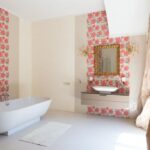
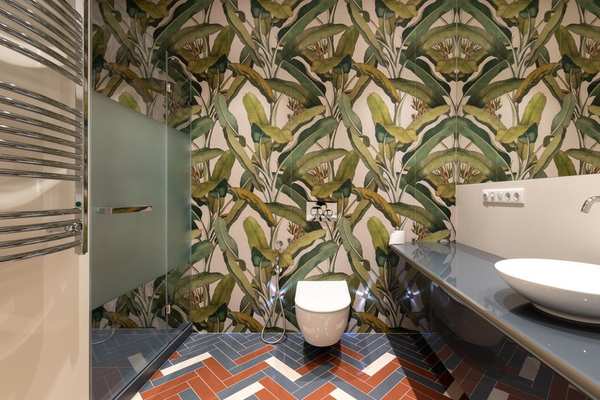
Wallpaper can work in a bathroom that gets steamy every morning, but the pattern is only half the decision. A beautiful finish may peel if damp air lingers, splashes reach its seams, or moisture is already trapped in the wall. The best wallpaper for humid bathrooms combines a suitable wallcovering, careful installation and a room that dries promptly after use.
Before choosing a roll, notice where water collects and how quickly the mirror clears after a shower. Those clues may tell you more about durability than a product described simply as “waterproof.”
Why steam causes wallpaper problems
Hot showers add moisture to indoor air. When that air meets a cooler wall, water can condense on its surface. Paper-based coverings may absorb moisture, while repeated dampening can stress adhesive, loosen seams and slow the drying of vulnerable wall materials.
A wipeable finish does not make an entire installation waterproof. Moisture may enter around edges or damaged joints. Covering a wall that is already damp from a leak can conceal the problem rather than fix it. Consider both how humid the bathroom becomes and how quickly it recovers afterward.
Which wallpaper materials work best?
Vinyl-faced and solid-vinyl coverings
Many vinyl-faced products tolerate occasional humidity better than untreated paper, while solid-vinyl coverings can provide a durable, wipeable finish. Performance still depends on backing, seams and installation. Choose a product explicitly approved for bathrooms or high-humidity interiors, not merely advertised as washable.
Vinyl cannot compensate for a damp substrate or failed ventilation. Ask the supplier about compatible adhesives, wall preparation and restrictions near water.
Nonwoven and specialty wallpaper
Some dimensionally stable nonwoven wallcoverings resist expansion better than traditional paper. However, “nonwoven” describes construction, not guaranteed moisture resistance. Look for written manufacturer guidance confirming that the particular moisture tolerant wallpaper suits your bathroom.
Peel-and-stick options
Removable wallpaper is convenient for an accent wall, but self-adhesive products vary considerably. Choose one approved for humid bathrooms, check compatibility with the existing paint, and test a sample before covering the whole wall. Ordinary dry-room peel-and-stick material may curl in a bathroom used for daily showers.
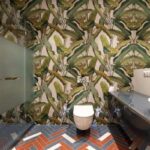
Untreated paper, delicate natural fibers and absorbent textured finishes are generally less suitable for regularly steamy bathrooms. They make more sense in a powder room without a shower.
Give bathroom ventilation equal priority
Even humidity resistant wallpaper needs the room to dry. An exhaust fan should discharge moist air outdoors, not into an attic or ceiling cavity. The Home Ventilating Institute recommends keeping the fan running for about 20 minutes after bathroom use. A room that remains damp may need a longer period or improved equipment.
Fan capacity also matters. For bathrooms up to 100 square feet, the institute recommends approximately one cubic foot per minute of airflow per square foot of floor area. Duct bends, restrictions and installation quality affect real performance. A fan that makes noise but leaves the room foggy deserves investigation.
A window may help when outdoor conditions are favorable, but humid outside air is not always useful. Ensure the fan has an unobstructed path for replacement air from adjoining rooms.
The U.S. Environmental Protection Agency advises keeping indoor relative humidity below 60 percent, ideally around 30–50 percent where practical. A simple hygrometer helps track whether your bathroom dries between showers. Repeated condensation or persistently high humidity should be addressed before installing wallpaper.
Place wallpaper away from direct water
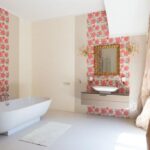
A wall across from the shower is usually a better candidate than the surface beside a bathtub. A vanity accent wall can work well if splashes are controlled, perhaps with a suitable backsplash. Judge each wall by actual water exposure rather than its distance from the doorway.
Avoid ordinary decorative wallpaper inside showers or where it regularly receives direct spray. Those locations require a properly specified waterproof wall system. Planning bathroom accent wall placement beforehand can prevent an expensive mistake.
Wall preparation and adhesives matter
Start with a clean, dry and sound wall. Fix leaks, investigate mildew, repair damaged plaster or drywall, and remove loose paint. Use a primer compatible with the wall and selected covering. Good preparation helps adhesive bond evenly and avoids locking existing moisture behind the finish.
For pasted products, use the adhesive recommended by the wallpaper manufacturer for the intended conditions. Generic paste is not automatically appropriate for steamy bathroom wallpaper. Follow the specified curing time, installation temperature and ventilation instructions. Avoid heavy shower use until the installation has cured as directed.
Pay attention to corners, edges and seams, where water can find a route behind a covering. Smooth strips carefully without overstretching them. Do not add a clear protective coating unless the manufacturer approves it; an incompatible sealer may affect the appearance or performance of the finish.
Test the room before committing
Imagine a family bathroom used for two hot showers each morning. The mirror stays fogged for an hour and the wall beside the shower sometimes feels damp. Installing vinyl wallpaper immediately would be premature. First, inspect the exhaust fan, check for leaks and address condensation.
Once those issues are resolved, monitor humidity for several days. If the intended accent wall stays dry, apply a manufacturer-approved sample and observe its seams during normal use. This small trial is more informative than relying on a broad “water-resistant” label.
Keep the finished wall in good condition
Run the fan during and after showers, wipe splashes promptly and clean only as the manufacturer recommends. Check seams and corners periodically. Bubbling, peeling, staining or a persistent musty smell calls for investigating moisture, not simply gluing the edge down again.
For related decorating decisions, explore bathroom wall finish options and ways to reduce bathroom condensation. Both subjects help explain why the same wallpaper may perform differently in two apparently similar rooms.
Frequently asked questions
Can wallpaper survive in a bathroom without a window?
Yes, potentially. Effective mechanical ventilation exhausting outdoors, dry walls and a manufacturer-approved covering matter more than the presence of a window.
Is waterproof wallpaper suitable inside a shower?
Not automatically. Shower interiors need an approved waterproof assembly. Ordinary wallpaper should stay outside direct-spray areas unless a complete manufacturer-approved system expressly allows that use.
Why does bathroom wallpaper peel at the seams?
Lingering humidity, poor preparation, incompatible adhesive and water reaching exposed edges are common causes. Find the underlying problem before attempting repairs.
How long should the fan run after a shower?
About 20 minutes is a common industry recommendation, although some bathrooms need longer. The aim is to remove lingering moisture and allow surfaces to dry.
Choose a finish your bathroom can support
Good wallpaper for humid bathrooms starts with realistic expectations. Match the material to the exposure, keep it away from direct spray, follow the specified installation system and make ventilation dependable. When the room handles moisture properly, the decorative finish has a much better chance of lasting.